Sunday, March 20, 2016

Theory of a Game: Smash Brothers and Fighting Against God

Master Hand
(3/19/2016) --- Lately I've been thinking about Smash Brother's (1) as one of the core games of the Nintendo franchise. The original game was developed by HAL Laboratory (2) on 1999 for the Nintendo 64 platform.

The game spawned four sequel, technically three because the Nintendo 3DS version is not very different from the Wii U version. The game franchise could take different interpretations such as the lose of innocence as well transitioning to adulthood. (3)

One aspect I've been thinking a lot as a theory what if the game dynamics also represent a fight between fate itself or an allegory to the Titanomachy (4) and even so an elaborated concept of Acts 5:39 in which at the end is just a mere fight against God as well to the order.

Yet, the idea seems to be quite extreme on that level but at the end the characters are facing the same essence of what it gave them life, The Master Core (5 - 6). The idea of the Master Core itself as a force of creation could be related more to the Shinto lore and the Kami (7) interpretation of the Gods between a part of nature instead of being something independent the Master Core and his emissaries are part of the same universe.
Tabuu
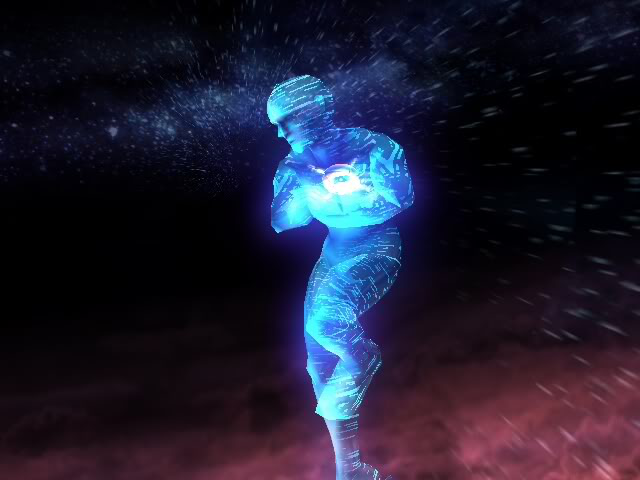
We have the concept of a trinity between the Master Hand, Crazy Hand and Tabuu. All of them act as heralds of the Master Core as well they compose part of is essence in which the story develops; but at the end is when the player defeat the hands where the true self of the Master Core is revealed.

The Core is corrupted, is not perfect, it has become corrupted. At the end what is the core? Is an ethereal being, is a being that at the end is composed of mere energy, but the way it interacts with the player shows that Core is a force that creates stability on the universe. Not only can be interpreted as the heart of the person that is playing with his toys.

The globes of the hands they look a lot as if they were Mario or Luigi, but at least an entity that creates a reflection on the beings that seem to influence the universe. What if The time-frame of the game is set on a point where the universe is about to collapse and the Master Core is looking for someone to hold his essence? I know is just a mere crazy theory, but it doesn't sound as farfetched because the characters are fighting against the entity who gave them life.

The problem is on why to defy the God of this universe? The same being who controlled every single strings of their actions. It would be the ultimate sin, the last taboo; and probably that was the sin that was committed on Brawl with the defiance of the last boss Tabuu, who tried to control the power of the Core but failed.

At the end there is no heaven or hell, much of the characters turn back into the status of figurines, they just turn back into what they were beings with no essence, who lead a fight that had no victory; because at the end life is just a mere mirage.


References:


  1. http://www.mariowiki.com/Super_Smash_Brothers
  2. http://www.hallab.co.jp/
  3. http://gamerant.com/super-smash-bros-theory/
  4. https://en.wikipedia.org/wiki/Titanomachy
  5. http://www.ssbwiki.com/Master_Core
  6. http://www.forbes.com/sites/insertcoin/2013/07/26/wii-us-super-smash-bros-wont-have-story-mode-for-the-worst-reason-ever/#1e4be327792e
  7. https://en.wikipedia.org/wiki/Kami

Saturday, March 19, 2016

How Any Upcoming Zelda Games Should Take Inspiration From Chrono Trigger

(3/18/2016) --- Chrono Trigger and The Legend of Zelda are two of the most emblematic games within the niche of the market back in the late 80's and early 90's. The games still resonate within the imagery of the public as well the generations who played them; in fact The Legend of Zelda (1) is still popular and the franchise had developed into multiple spin-offs while Chrono Trigger (2) only had a few off-shots including Chrono Cross and Radical Dreamers.

Players have to understand that these two games created an impact in the imagery of the players of each generations and influenced developers within the next decades.

As any other franchises Square sequels with the Chrono project didn't had the same economical and social reception as the first installment, besides the lack of organizational approach the developers wanted to take (3).  The Chrono series itself offered a very defined aspect in the world of storytelling, it was precise but at the same time gave the players the chance to explore a complex world that surrounds La Guardia.

Then in 1998 we got one of the seminal games of all times, Ocarina of Time (4), the game essentially changed the modern panorama (5) and there is an expectation that Zelda Wii U will achieve something similar. What is interesting that both games contain similar fantasy elements and were similar successful on their own time is that Zelda prevailed on a commercial ground.

Zelda itself could learn in terms of continuity and gameplay could learn from the success of Chrono, as both franchise at a certain point had used time-travel as a storytelling resource, probably by technical issues when Ocarina of Time hit the market contained less space for a bigger scenario but as time and technology progressed within the industry, maps became as big as the game story mode.

The Legend of Zelda had reached a point that it the time frame of the chronology got divided into three different timelines (The Fallen Hero, The Adult Timeline and The Child Timeline) and the story of the game became quite convoluted, not to mention sparse as different Links appeared on the games, all justified by endless cycle of reincarnation. Almost being as a cruel joke to live in an eternal existence of misery and suffering (6).

The Wii U version could update the idea of time traveling by placing Link to interact with different eras much as it happened with Crono, in another case it could still follow the interaction between Hyrule, Termina or Lorule and let the player play on the different dimensions of the multiverse. There are so many different options to explore within the development of technology and the creative use of storytelling to revitalize the franchise back as it was on the golden days.

The incorporation of playing as multiple characters or adding a party wouldn't be a bad idea either, it won't turn the game into another RPG or a clone of Final Fantasy; the idea of multi-characters interactions is already been explored on Hyrule Warriors - even if it's not part of the canon, it gives a fresh perspective on the story of the Hyrule Fantasy -.

Queen Zeal
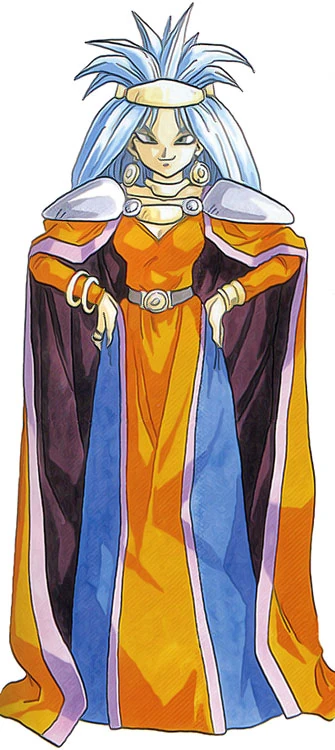
Using a certain set of characters through the game and giving a direct continuation to what happened to the previous ones. Bringing a more complex villain that don't fit on the Ganon archetype could be awesome. Thinking of a Machiavelli villain as the Queen of Zeal in which she showed hate and was in a search of immortality, without even hesitating into sacrificing her own daughter to obtain such power.

The Interlopers or at least characters that could be similar could be the best villain as they seem to be more complex on their machinations. Being them the Twili, as well with their previous history of bringing chaos they could be  used as the best villains to explore topics of desolation and power. Instead of finding the villain who only wants some personal gain through a powerful artifact or as well his disciples who aren't far away from their masters persona.

Inspiration could come into exploring further time traveling, the Time Stones and how the Ocarina was created could give some interesting plot lines to the games. Letting Link be more freely and let the players know more about Hryule without being too cryptic about the world they are playing in.


References:


  1. http://zeldawiki.org/The_Legend_of_Zelda_(Game)
  2. http://chrono.wikia.com/wiki/Chrono_Trigger
  3. Game Informer staff (February 2008). Game Informer. GameStop Corporation. pp. 24–25.
  4.  http://zeldawiki.org/The_Legend_of_Zelda:_Ocarina_of_Time
  5. http://www.designntrend.com/articles/72293/20160318/legend-of-zelda-wii-u-dev-game-finished-ocarina-of-time.htm
  6. https://en.wikipedia.org/wiki/Rebirth_(Buddhism)

Wednesday, March 16, 2016

Game Theory Book of Mudora and the Evolution of the Hylian Language

(3/15/2016) --- Hello everyone; on this entry we are going to explore a little bit the myths and theories behind the Book of Mudora. As much of the Zelda fanatics know the book of Mudora is an item that at first appeared at Link to the Past as a tool that assisted Link in order to translate the ancient Hylian Language.

The problem with the Book of Mudora it goes on the translation of the versions. In the Japanese version there are no pieces of information towards what the Book of Mudora is beyond being a translation tool. In the North America release, the Book of Mudora was added more text and became more a core book towards the Hylian mythology.

It became the book with the core beliefs of the Hylian culture, the prophecies as well the language. The book became much of a central book of the beliefs and theism of the culture; in other words the idea of the Book of Mudora being an analogue of the Bible, Quaran or the Torah.

At the same time the book projects a more serious approach on semiotics and the theory that mostly the Book of Mudora is a composition of the evolution of the Hylian language. It is not strange for a cultural group of people to let dedicate a study of the evolution of the language or the applications. In other words The Book of Mudora could be a treaty on Hylian semiotics instead of being some sort of holy book; but at the same time we all know that language plays an important part of the lore within The Legend of Zelda; language within the folklore that is shown in the game it is shown as almost sacred, a tool in which the users can change the world.

As in a real world example, the use of the printed text as well with religious tones could be linked to the evolution of the language. We can relate to Johannes Gutenberg and the invention of the printer in which by just making the Bible accessible to the masses it created a beginning for literacy. Within every game there is some sort of evolution of the language.

The Great Deku Tree
If you have some time, I recommend checking on this link in which there is a complete explanation on how language evolve. The common denominator in the evolution of the language is set on the parameters and conventionalisms where a group of individuals set in order to interact between a channel. All of these has to go to the assumption that the understanding of the meaning vs. the object has the be understood by all the parties.

Translation from one language to the other is just of finding the interpretation on what vocable superimpose other in each language as well how to create a linguistic synapses between the communication process. All these process (that I probably just explained as short as possible) can take as little over 20 years in which words evolve and all over the course of a century.  Which is the same case within the Hylian language on the different timelines, which all of them show an evolution of the communication process that takes at Hyrule.

On one side of the graph we have Old Hylian and on the other we have New Hylian. Old Hylian was the common text found in Ocarina of Time while New Hylian being the a direct successor on the timeline.

Both set of texts have influence on Hiragana and Katakana syllabary, albeit the presentation is rather cryptic due the developers not containing a proper design on the writing system of Hyrule but if we use the Japanese system as a starting point we can interpret that the alphabet evolved (depending on the timeline) towards a complex system similar as the Kanji.

Now going back on the very beginning, the Book of Mudora has a relation towards the evolution of Hyrule since the Era of Creation. Not by containing the prophecies per-se but rather the tools that gave the future generations to settle and flourish; because if it wasn't due the influence of language there wouldn't be any kingdom or cities.

Thank you for reading.

References:


  1. http://zeldawiki.org/The_Legend_of_Zelda:_A_Link_to_the_Past
  2. http://zeldawiki.org/Book_of_Mudora
  3. https://en.wikipedia.org/wiki/Semiotics
  4. http://zeldawiki.org/Hylian_Language
  5. http://www.pnas.org/content/96/14/8028.full
  6. https://en.wikipedia.org/wiki/Hiragana
  7. https://en.wikipedia.org/wiki/Katakana

Tuesday, March 8, 2016

Religious Imagery Found in The Legend of Zelda Chapter One

(3/7/2016) --- Hello everyone. I hope you all are having a great week so far; I had the time to set some errands on my side as well enjoy life a little bit more. This is the first chapter of an analysis of socio-economical history of Hyrule as well the different kingdoms and how much the real word had influenced the game franchise.

The Legend of Zelda and the Book of Magic

To start this journey we need to go on a chronological order in which each game had been released; the reason is it will be simpler to understand how the practices of censorship's between Nintendo and Nintendo of America influenced the releases of each game.

Bible
As many players know by experience, within the first game The Legend of Zelda: The Hyrule Fantasy we are exposed to an open world in which the player must travel through the over world of Hyrule in search of the mythical artifact known as the Triforce of Wisdom, that was shattered into 8 pieces to be hidden from Ganon.

The game itself wasn't explicit towards the Zelda mythos, as being the first of is kind and because of the system limitations of the Nintendo. What is interesting is that there are some form of censorship's from the North American Branch that are still present, albeit probably less harsh than it was on the 80's.

Within the first game it was impossible to know what were the major historical influences that surrounded the world of Hyrule and if it was similar to our own. During the gameplay there are certain elements found within the world that is in ruins, such as the Book of Magic which is a power up item which change the nature of the spells cast by the Magical Rod.

The Book of Magic in the original Japanese version was called Bible, but due the strict content of the North American branch the game elements where edited, albeit probably due a censor mistake much of the original artwork was kept inside the artwork book in which the content remained intact. 

The idea of what Zelda was and was originally intended had evolved beyond the first game of the franchise; much of it back then look as a fantasy adventure not very different from Dungeons and Dragons, but also it had a tint of the Crusades within a knight acting in behalf of a ruler to retrieve a piece of information, kill an enemy and recover a power artifact. There were so many speculations but the game itself didn't offered too much beyond the post-apocalyptic scenario which was located.

The game itself has a lot of subtle elements towards the creators beliefs as well literary influences on what made them to develop the game into a well known franchise. In another entry we will explore more about the Hyrule myths; one detail that this game got some notoriety was due the confusion between the Manji pattern and the lack of understanding of Buddhist symbolism within the Western Hemisphere.

The Manji
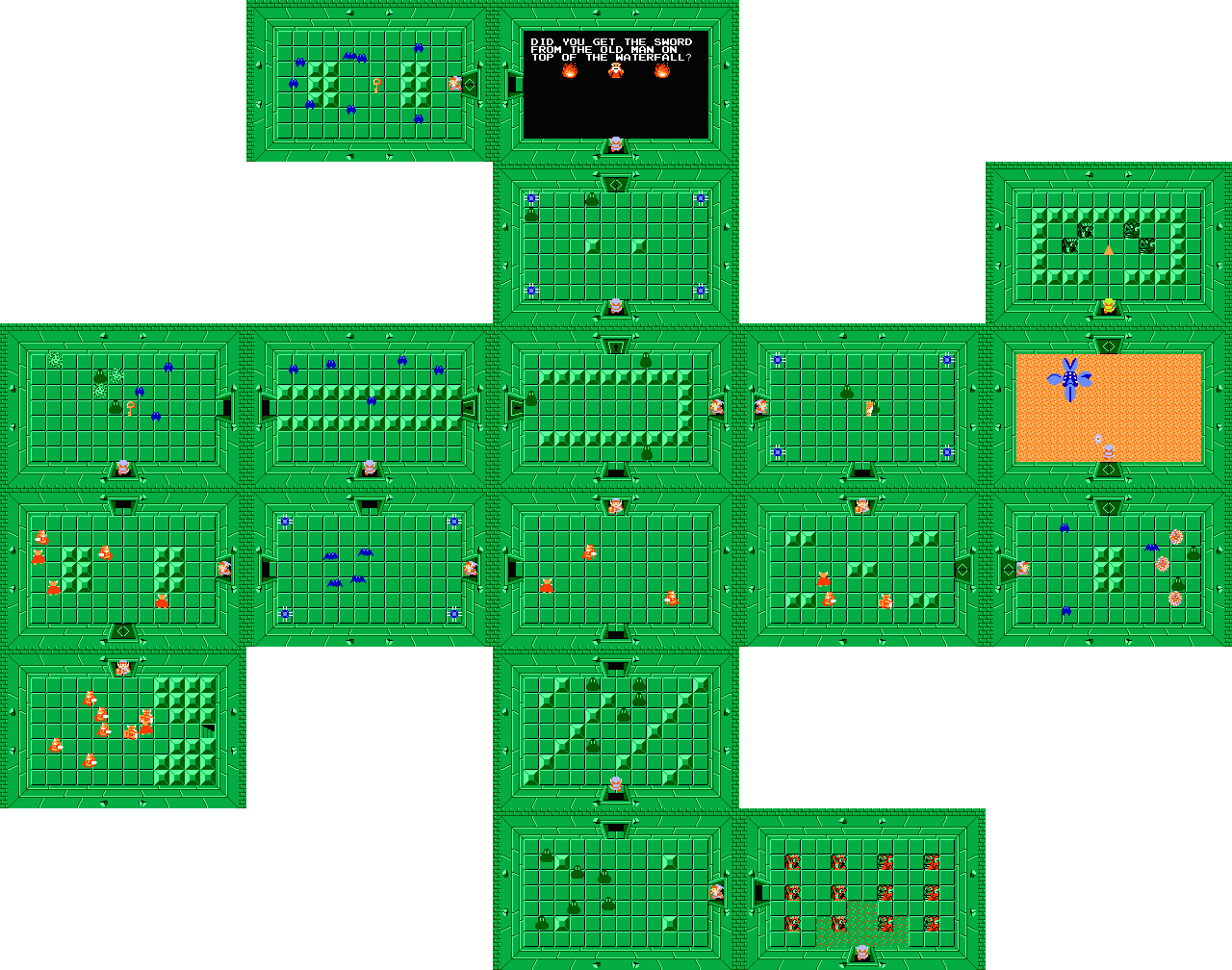
What is fantastic about the game is that incorporate so many different elements of the world in very subtle ways, that can lead to interpretations about Link's journey. The third dungeon within the incorporation of the Manji could lead to interpret that there is something better on Link's future but as well balance due the mixing of the good fortune with the number 3.

Number three within the Christian eschatology means perfection but as well balance. It can go with a path through illumination and redemption in the process of the journey about saving a kingdom that was left in ruins.

The essential battle between good and evil could represent the complex fights between a person ego against the environment, the simple desire to do something noble without gaining any personal gain in the process. The problem within this timeline as well within the first setting is that there are no parallels to compare him with anyone else, he is no savior, no hero from any prophecy, no reincarnation, no nothing. He is just a young guy who appeared outside in order to save someone (Impa) and through his deeds he was entitled to help saving the Kingdom of Hyrule, in a timeline where the Hero originally fallen thus leaving room for a new beginning.  


References:

  1. http://www.jjmccullough.com/Nintendo.php
  2. http://zelda.wikia.com/wiki/Book_of_Magic
  3. http://injapan.gaijinpot.com/play/culture/2012/06/12/cats-numbers-and-other-japanese-superstitions/
  4. http://christianity.stackexchange.com/questions/2933/why-is-the-number-three-special
  5. http://zelda.wikia.com/wiki/Link

Wednesday, February 24, 2016

Game Hypothesis Mario 64 Tesseract and Euclidean Space Theory

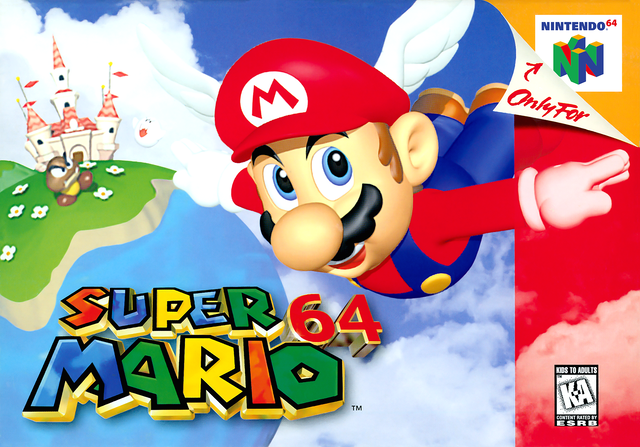
Cover of Nintendo 64 Cartridge 
(2/23/2016) --- Hello everyone, thank you very much for your last comments on my Rick and Morty: Pocket Morty's Theory which was my first time writing something towards more pop oriented.

This is just a theory of mine, nothing else, in which a little bit of entertainment is mixed with some knowledge in order to create an explanation for a game event or a setting.

We all know Super Mario 64, as it became one of the most iconic games of the late 1990's with the release of the Nintendo 64. The premise of the game is quite simplistic - Princess Peach sent Mario a letter in which she invited him for a cake in the castle. When Mario arrives he found himself greeted by a Lakitu Bros who follow him with a camera (as the Lakitu is the reference point of the player for the adventure); as Mario goes near the castle, Bowser greets him off-camera and ask him to leave. -

Happy Little Toad
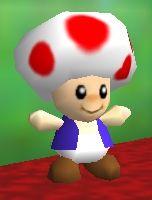
- When Mario finally reach inside the castle he is greeted by Toad who explains that Bowser kidnapped Peach again, stole 120 Power Stars and trapped everyone inside the castle walls. - The game itself is quite charming almost 20 years later, in which also introduced the idea of 3D concept into the home consoles to the players.

Yes, the idea of having stereoscopic elements in video games is not new. It goes as far as the 1960's in which the idea of entertainment was explored with The Sword of Damocles in which technically virtually reality was invented by Dr. Ivan Sutherland. There's always that hand between science fiction, physics and technology that goes hand in hand at the moment of creating entertaining.


What it is fantastic about video games is that they can mix a complete set of real life theories into their games mechanics, what it gets my attention within Super Mario 64 is how in a subtle way the concept of Real Coordinate Space is applied in such a joyful fashion, but not only on the Topological level but also concepts from Euclidean Space and the geometrical concept of the Tesseract.

Coordinates
Why I am mentioning the Hypercube as beginning? To start the game models the hub or central point of navigating through the game connects on different coordinates, in which we could consider 0 as the zero object vector if we talk about in algebraic concept.

From that point where Mario arrives in the castle we could consider the cross-polytope as the starting point to navigate through the adventure.

As we explore what Boswer did in order to kidnap Peach we could consider there is no exit or no entrance; we could navigate perfectly back and forth through the different points in time and space, but time itself won't fold backwards or way too forward thus creating a paradox. Time within the game is fixed and will go continuously within certain events that are related through the story line.

Course 1
The paradoxes will appear whenever the player would have the desire to repeat a course or a certain specific level, but since time is fixed as a continuous event, no matter what actions you take when you repeat a mission, as soon you clear it you won't be able to alter the past and the course will show any starts you obtained as shadows of who they were.

Let's discuss this option within the concepts of Discrete Time and Continuous Time  with the first level Bob-Omb Battlefield . The Bob-Omb Battlefield is the first of 15 levels inside the game, each level offers a unique perspective in which how time develops inside the painting or to better say it inside the four-dimensional space that Bowser created inside each paint and how those paintings connect to different physical points of space in which Mario can interact with but as soon as he leaves his own presence times inside those paintings resets.

Big Bob-Omb
Using Big Bob-Omb, the King of the Bob-Ombs as an example. He will always be there whenever the character comes back but his interactions will change depending on which character goes. In Super Mario 64 DS Big Bob-Omb will have a different dialogue with each character, but as soon the player completes the course his star will be gone.

In Mario 64, there is only one set of dialogue that reacts to the plumber but any previous actions will be just shadows. Every single step the plumber takes could be measured within an exact description of what the player does.

Also each scenario exhibits as it was mentioned a reference of an Hypercube, not only where time folds but also we could see how the topography of each course acts as vertex-first perspective projection. To have an idea; the player can see the entirely where he is trapped just by going to a high point in each scenario and look around the sky and see the coordinate dimension that conform each one of the courses.

Tesseract Net
It is just beautiful to see some of those dynamics; it gives even the idea that Mario was already trapped inside Bowser's jaw as soon he placed a foot in the courtyard of the castle. As the outside of the castle seemed to be trapped also inside some form of Tesseract net. The castle being in the middle, the courses inside but as well being distributed on each side of the cubes and eventually Bowser on the top.

Another reason on why I say the entire game is one big Hypercube is because Bowser itself seems to avoid death several times as each painting as their own time and sets of rules. In which Bowser will be alive and dead after each defeat but yet he seems to avoid death several times just by escaping from the each cube or paint.

The game itself can be an endless nightmare in which Bowser just created an impossible trap to escape in order to lure and kill Mario. In which probably there is an existential nightmare as which each game over, which is dead there is just a mere beginning to an endless time loop.

References:

  1. http://www.guscalvo.com/2016/02/rick-and-morty-theory-of-what-happened.html
  2. http://www.mariowiki.com/Super_Mario_64
  3. http://design.osu.edu/carlson/history/lesson17.html
  4. http://mathworld.wolfram.com/Tesseract.html
  5. Hazewinkel, Michiel, ed. (2001). https://en.wikipedia.org/wiki/Euclidean_space
  6. https://en.wikipedia.org/wiki/Discrete_time_and_continuous_time

Monday, February 22, 2016

Rick and Morty Theory of What Happened to Prime Rick

Crazy Mysterious Rick
(2/20/2016) --- At the end this is just a theory I had after seeing certain clips within the show, how certain events of the show connect or at least are vaguely explained in between the game as well the different episodes.

We all know, the show exposes the idea of different dimensions but also there is a general lack of continuity in different episodes. That wasn't made randomly, the idea of lack of continuity was made in order to keep the "organic" development of Rick and Morty story-line but at the same time there are some fixed elements that can be give some clues about the characters backgrounds.

The game Pocket Morty's link towards the television show and gives some vaguely but insightful information about the Rick and Morty multiverse and which character is each one. To start we need to locate the focal point of the game in which is Morty, just Morty without any title or other characteristic.

Assuming that this game takes place on the replacement dimension after the events of Episode 6 then Morty from Dimension C-137 and (Rogue) Rick as there are no signs of the Cronenbergs and Jerry seems to be aware of the Rick Citadels as well he seems to be in touch with Rick adventures, an aspect the Jerry from Dimension C-137 wasn't too aware off.

Morty
On the first episode we learned that Rick has been absent from his family for at least 15 years in which expands much of Summer's life as well Morty's entire one, On January 15th Rick suddenly appeared as on the Pilot the viewers know that Rick has been living with the Smith's for at least a month. In that short amount of time he started to bond with his grandchildren, at least the C-137 version's of Summer and Morty.

There are some contradictions in which he seems to be that Rick visited at a certain point of Morty's childhood but overall was extremely absent of his family life, as well on Close Rick-Counters of the Rick Kind the Beth from the Replacement Dimension seem to have a more friendly approach with her father as before the Rick from that dimension died he seemed to be more constant in their lives that the Rick from Dimension C-137.

The Replacement Dimension and C-137 seemed to follow a similar course in their histories, as well from the dimension in which Rick seems to come from, giving him the chance to fit properly in all of them. C-137 has another gap in which it seems the original Rick from that dimension vanished without a trace and the Rogue Rick took his place after killing his own Morty.

Rogue Rick original Morty demise
The idea that the Rick we know is not from C-137 at all comes from the very intro in which he abruptly escapes from a dimension or a planet filled with predator toads in which his Morty eventually got killed. Instead of trying to fix the problem by cloning his Morty or "traveling through time" or dealing with his family, he just jumped to the C-137 in which the Rick there was absent for a long time.

Trying to fix his mistakes he took some interest on his grandson from that dimension and became his protector, up to the point that he had shown some borderline personality to keep his new Morty safe, but also he kept some of his lazy habits in which he created the Cronenberg virus and instead of fixing he just left along with Morty to a dimension in which his replacement counterparts died in an explosion after fixing the Cronenberg virus.

Mysterious Rick
Assuming that the Rick from C-137 came back and found the world infected with the virus and no signs of his Morty he probably went insane for not having the symbiotic relationship most of the Rick have with their Morty's after being separated for certain periods of time. This Rick started desperate to search for his Morty and in the process recruiting almost any Morty's he found as substitutes.

Then during the game events Mysterious Rick or as I like to call it Prime Rick seems to be focused on Rogue Rick Morty, his Morty that Rick stole as Rogue Rick became responsible of his own Morty demise at the jaws of the carnivore toads.

As time passed Mysterious Rick succumbed to the insanity of not being synchronized to his own Morty and couldn't sync with any of the ones he captured or stole to other Ricks and so he became the detonator on why the Pocket Morty's game started, in which it seems to be innocent at the very beginning but the game itself could bring a problem to reality as every Morty needs their own Rick.

What happened to the Rick we see the on the very beginning is the same Rick that took over in C-137 out of guilt of letting his own Morty die, while the Prime Rick was away, thus leading to the events of Pocket Morty's Game and transforming him into Mysterious Rick which at the beginning and the end Mysterious Rick was only trying to recover his Morty from Rogue Rick by using a very complex plot that probably started by a mere accident.

Friday, February 5, 2016

The Legend of Zelda and How the Many Worlds Interpretation

Official Zelda Timeline - Hyrule Historia
(2/05/2016) --- Lately I've been thinking on how the concepts of physics as well biology are applied on video games towards their own cosmology rules. Instead of going through a hypothetical lengthy explanation we can use the concept of involving pop culture to analyze and theorize some of the theoretical scenarios towards video game universe.

On this first entry let's going to talk a little bit about The Legend of Zelda and how through over the last 30 years has offered different games in which they set on a kingdom known as Hyrule but there are multiple divergences on the actions the character Link takes towards personal decision or the external influences of others.

The Many-Worlds Interpretation is not a relative concept that is linked towards the Legend of Zelda, at least speaking on a pop culture level. Companies as Marvel and DC Comics had used the Multiverse and Many Worlds theory to explain the different approaches of the different reboots or shifts in reality that their heroes face.

DC Comics New 52
In the DC-verse within the current New 52 universe where it is explained that the multiverse created 52 different parallel Earths (Hyde, 2011). In part that decision was to create a new line-up for the comics but as well to give the readers a complex story line on how the universe through the wave-function collapse can in theory regenerate itself or through the course of certain beings.

This concept itself was at first proposed by physicist Hugh Everett in 1957  (Byrne, 2010) in which he termed as the "relative state of formulation". The theory itself can be described as an ontological and literal interpretation of the creation of other worlds just by mere interaction with the universe.

It is simple but yet complex to describe it in one simple entry, but as well is fascinating to think on how much physics and astrophysics towards their literal speculation towards philosophy and nature can give to the mass cultures so much influence and entertainment.

Many-world implies that all possible alternate histories and futures are real, each one of them representing an actual "world" or in another case an actual universe. The hypothesis states that there is a very large number of universe, even so maybe infinite, leading the possibilities that any actions that didn't happened in our past but there was a chance they could, has occurred in some other universe. The theory itself has links to the Copenhagen Interpretation as well to the Schrodinger  Equation in which everything at the end could be a correlation paradox.

The many faces of Link
Each of the time-lines (3 in total) until divided by Ocarina of Time (Zeldapedia: Ocarina of Time, 1998) give outlooks on the decisions each of the characters had taken as well on how the world adapted after each action and war.

One example goes on the "Downfall Timeline" in which Link is killed after failing to stop Ganondorf and Ganondorf eventually is sealed on the Sacred Realm which due the evil influence it turned into the Dark World.

Then on the timeline known as the "Adult Timeline" in which Links defeat Ganondorf, the tragedy mirrors what happened in the "Downfall" one and because of the actions of Ganon eventually Hyrule is flooded and later a new continent is discovered where the Kingdom is reborn. Each of these two timelines goes into a correlation in which there is not a physical description of reality but rather similar scenarios that are destined to mirror each other all based on actions.

Demise
The idea of the different worlds could be applied to the metaphysical concept of reincarnation that is known as reincarnation and is applied to the game. The most specific example is with Demise course in which he set an endless cycle of suffering for Link, Zelda and Groose descendants in which no matter what generation they are, it will be a new world and a new time where suffering is linked to all of them in order to achieve glory.

The different worlds are created just by mere actions and odds in history. Giving the player the chance to explore different hypothetical scenarios about Hyrule and the adventures of Link.

It is matter of time to wait to see how the game known as Zelda Wii U will fit on the chronology of the franchise.


References:

  • http://www.dccomics.com/blog/2011/08/17/super-hero-fans-expected-to-line-up-early-as-dc-entertainment-launches-new-era-of-comic-books (Hyde 2011)
  • Peter Byrne (2010). The Many Worlds of Hugh Everett III: Multiple Universes, Mutual Assured Destruction, and the Meltdown of a Nuclear Family.
  • https://en.wikipedia.org/wiki/Schr%C3%B6dinger_equation
  • Quantum physics & observed reality: a critical interpretation of quantum mechanics. World Scientific. p. 2.
  • http://zelda.wikia.com/wiki/The_Legend_of_Zelda:_Ocarina_of_Time