Showing posts with label cartoons. Show all posts

Saturday, November 2, 2024

The Censored Eleven

I am trying to think on how much times had changed, yet some aspects of the past are refused to be learned by generations that follow. I feel we have changed for good on some extent during the last sixty years but yet echoes of the past such as white supremacy refuse to die. The Censored Eleven are a series of eleven cartoons that are part of the Merrie Melodies and Looney Tunes catalogue that had been out of circulation since 1968 due the extreme racist tones that are contained in each of the animated shorts.

The shorts which derive into a plethora of stereotypes against minorities, mostly aimed at African Americans and Aboriginal populations back in the early 1900's. The problematic of the censored Eleven comes from decades-old and current day incarnations of African American stereotypes which include mammy, Mandingo, Sapphire, Uncle Tom and watermelon, many of the stereotypes created during the height of the trans-Atlantic Slave Trade were used to help commodify black bodies and justify slavery as a business. One example an enslaved person, forced under violence to work from sunrise to sunset, could hardly be described as lazy, yet laziness and characteristics of submissiveness historically was assigned as a stereotype of African Americans.

Hittin' the Train for Halleluiah Land
Several stereotypes were developed as offensive caricatures constructed during slavery and were subsequently popularized by minstrel shows. One trope is the representation of the mammy archetype, where the trope pictured of black women working in the homes of white families and being the caretakers for the children, the trope painted of a domestic worker who had an undying loyalty to their slaveholders.

The image of mammy and Uncle Tom to name a few, were sought to legitimize the institution of slavery, which led the mammy archetype to increase popularity after the American Civil War and into the mid 1900's.

Mass media was attached to the likeness of mass produced consumers goods from flour to motor oil, which solidified the mammy archetype as a trusted figure in the white imaginations. We can see traces of what it was spoken in the last paragraph by mentioning the concept of discriminatory advertisement which is the practice of including African bodies that will please the white sensitivity.

The cartoon output of Warner Bros. during its most active period sometimes had censorship problems that were complex than those of movie features', as unlike films which they were censored in the script, the animated shorts were passed upon only when completed, which made producers cautious about the restrictions.

References:

  1. Popular and Pervasive Sterotypes of African Americans: https://nmaahc.si.edu/explore/stories/popular-and-pervasive-stereotypes-african-americans
  2. Wikipedia Censored Eleven: https://en.wikipedia.org/wiki/Censored_Eleven
  3. Marketing has a Colorism Problem: https://hbr.org/2021/05/marketing-still-has-a-colorism-problem

Monday, July 8, 2013

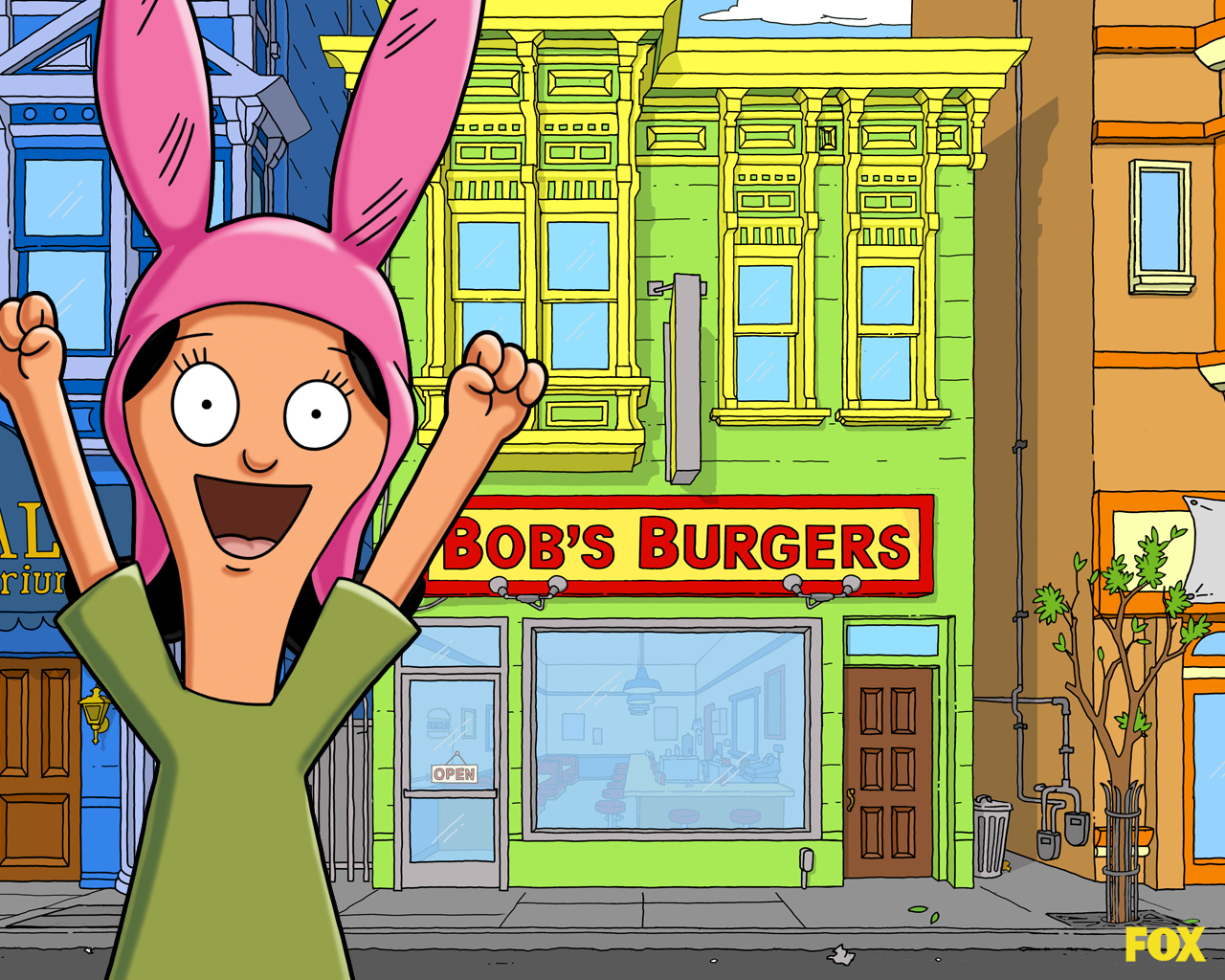
The Simplicity Kitsch of Bob's Burger: A Short Essay of Old School Television in Contemporary Times

Louise Belcher 
Tampa, (Fl) -- There is something honest and beautiful about Bob's Burger - it reminds me of the late 1990's cartoons on the animation almost on the time period where King of the Hill made his debut -, yet the show use a similar equation that The Simpsons had on the early years before Homer went D'oh! and Lisa went Gaga.

The writing of the show is fresh even if it has been seen many times in the past and with today's competition as Family Guy (as well other 3 Seth McFarland clones) and with The Simpsons itself; because, the show has what the others left behind many years ago in order to keep the audience; but, Bob's Burger follow more the vein of King of the Hill on the writing rather than other shows of nuclear dysfunctional families as it appeals to a more mature audience without using an overly impact of slapstick comedy.

The family dynamic between the Belchers reflect the early dynamics of The Simpsons as an incompetent father tried to focus on gaining respect of his children while them only paid attention to their mother. The show shows a problematic in today's world due the rise on the price of living and many families being separated in order to keep their houses as well pay for their children's education they nucleus of an unity has been broken but beside that the intrusion of multimedia and "celebrities" advertisements in the homes of families due the use of different technologies had created a new generation of children that are far more knowledgeable on certain topics but yet more naive due the world problems because of their ego centrism and their perspective that everything has to be given "now" to them without any effort.

Probably Bob's Burger will bring back the essences of Animation Domination and will put the most established shows in an order that their scripts will improve to attract again a demographic of adults who are tired of trying to find a fresh block aimed to adults that don't include traces of child thematic's on the story-line.

When The Simpson's started on 1989 as an independent show from The Tracy Ulmann Show, the cartoon essentially defined what is adult animation today. Back on season 1 the show focused more on the family dynamics as well their interaction around their town, Springfield. Bob's Burgers follow on certain extent that concept but also dangles on the shenanigans of the family without making them extremely unrealistic (quoting The Simpson's, the Brazil episode) but yet making them lovable as people can relate to the Belcher family as the lovable losers they are.

Maybe with today's television we'll need to see more scripted shows that focus on actual events as well a fairly realistic approach of characters in comparison with today's world instead of showing a megalomaniac 1 year old who can speak and has an infatuation with a dog while they travel around time and space (we can leave that to all the "bear" fanatics of Dr. Who across the world) but writers can find inspiration on the mundane without going in the absurd but yet maybe in the kitsch.  

Wednesday, July 3, 2013

Daria: The Last Cartoon of Generation X

Daria Logo
Tampa, (Fl) --- As a member of the so called Generation X, the last generation that mixed the voice of non-conformity with the use of technology to express their non-conformity before they became hipsters and yuppies and raid into the conformity of the modern corporate world, they were much as me, a group of idealistic people who tried to change the world and eventually just gave up in their vast majority.

When the world of the generations was changing along came MTV Daria's; the last cartoon of a generation that wasn't keen to technologies and was more outspoken, which makes me wonder if in a hypothetical example Daria would turn out to be much as the rest of her generation,? and would lost her focus in life to become a writer.

The world of Daria wasn't far away from reality (except from that musical episode), a misunderstood teenage girl with a high IQ but yet extremely asocial to almost anyone else even among her family, but showing rare exceptions to one of her aunts and her father. Her best friend Jane who was much a young Bohemian who was as smart as Daria but yet not as solid to her cause; Daria's sister Quinn who was an insecure teenager fearful of rejection because as her sister she had some degree of intelligence but opted to hide it in order to fit in with the popular cliques and the list goes and goes.

The beauty of Daria is that is classic timeless piece of media, as the content is fresh and funny even almost a decade and a year later after the show ended in 2002; the show itself could follow a revival and find a new legion of fans but yet a follow up movie regards what happened with Lawndale wouldn't be a bad idea but yet if the show would be as fresh as it was on his prime is highly improbable, because today's generation is more self-centered than the one of a decade ago.

One sociological aspect of Daria is handling of alienation from part of society without gambling with sociopathic behaviors (even if they can be used to scared one or two individuals for your own amusement) but the topic of alienation is not exactly related to Daria herself as every single character face desolation and alienation in their own way.

Helen being scared of intimacy, Quinn fearful of being alone because of her "brains", Jake being fearful of interacting with other humans and being fearful of being rejected because of his neurosis but yet none of the characters seems to keep a healthy relationship between themselves because at the end they are full of themselves.

Probably Daria as a show projected what MTV become and was, as well what the future generations after the Generation X turned out to be, a bunch of individuals who don't give a crap about anything beyond their cellphones.